
Water Feature 101: Understanding the Basics of Your Pond, Pondless Waterfall, or Fountain
The Minnesota Homeowner’s Guide to What’s Normal, What’s Not, and When to Actually Worry
“Something’s Wrong With the Pond!” It was only a couple weeks after a spring cleaning startup in May when the call came in. “The pond is turning green already!” The homeowner sounded panicked. They had just invested a couple thousand dollars into cleaning and refreshing an ecosystem pond that had been neglected for several years in Lakeville, and now after a couple weeks it looked cloudy and green again. A few weeks later they called again because the water level had dropped during a hot stretch in July. Then again because one fish was sitting near the bottom.
To them, every change felt like the beginning of a disaster.
This happens constantly with new pond owners, new homeowners who inherit a pond, and those who want to refresh a pond after years of neglect. Most homeowners are used to static systems like swimming pools, aquariums, or landscaping. A water feature is different: it’s alive. Water temperature changes, beneficial bacteria colonies grow and shift, fish behavior changes with weather, rain affects water chemistry, wind changes evaporation rates, and ground settling can change waterfalls. Algae appears and disappears depending on sunlight, nutrients, and biological balance.
In other words, your pond changes. That does not mean something is wrong. One of the biggest reasons homeowners become frustrated with water features is simply because nobody ever explained how they actually behave. This article exists to change that. Think of this as your Water Feature 101 guide, written by people who work on ponds, waterfalls, fountains, and ecosystem systems every single day throughout Minneapolis, St. Paul, and southern Minnesota.
Some things are completely normal.
Some things need attention.
Some things require professional help.
Understanding the difference is what turns a stressful water feature into a peaceful one.
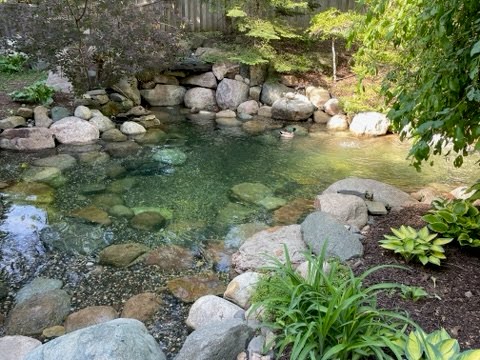
Table of Contents
Understanding What a Water Feature Actually Is
Before we jump into questions, it is important to understand one thing: a properly built ecosystem pond is not just a decorative hole with water in it. It’s a living biological system.
Ecosystem methodology compares a pond more closely to a natural lake or stream than to a swimming pool. Beneficial bacteria, moving water, plants, fish, oxygen exchange, sunlight, and filtration all work together to create balance.
That means:
- Your pond will evolve over time
- Conditions change seasonally
- Water clarity fluctuates
- Fish behavior changes
- Maintenance matters
The goal is not sterile perfection, the goal is healthy balance. So let’s take this one step at a time…
Water Loss & Leaks
How much evaporation is normal?
Some evaporation is completely normal.
During Minnesota spring and summers, especially during windy or humid stretches, ponds can lose significant water naturally. According to the University of Minnesota Extension, evaporation rates increase dramatically with:
- Wind exposure
- Low humidity
- High temperatures
- Increased waterfall splash
- Waterfalls lose water even faster because moving water exposes more surface area to air.
What’s normal?
About 1/4″ to 1/2″ per day is normal during standard operation. In some features with dramatic waterfall drops, long streams, or with shallower pooling areas, 3/4“ is not uncommon for features we’ve seen in Minnesota.
- What’s NOT normal?
Losing several inches daily - Constantly needing to refill (3 or more times a week)
- Wet areas forming around the pond
Where Should I Check My Pond for Leaks?
Most pond leaks are not dramatic liner failures. In fact, the majority of leaks we find are surprisingly small and simple issues that slowly allow water to escape over time. The most common places to check are:
- Waterfall splash-out during windy weather
- Low liner edges around streams or waterfalls
- Plumbing fittings and connections
- Skimmer and biofalls faceplates
- Areas where soil has settled
- Decorative rocks accidentally redirecting water outside the pond
- Wet spots or unusually soggy areas around the feature
One homeowner in Prior Lake was convinced their liner had completely failed. After inspecting the system, we discovered the real problem was a single decorative rock in her biofalls waterfall box that had shifted slightly with normal ground settling and was redirecting water over the liner edge during windy afternoons. A tiny adjustment solved the issue.
Most leaks are not catastrophic. They are usually small water-routing problems that become noticeable over time.
Why does my waterfall lose more water on windy days?
Waterfalls throw microscopic droplets farther than people realize. Tall waterfalls, steep cascades, and strong pump flow create mist and splash. Wind carries that water out of the system. This is especially common on:
- Elevated streams
- Formal spillways
- Features with strong flow rates
It does not mean your pond is broken, it just means that more water in motion will take more water upkeep to keep in operation.
I don’t see any wet spots… how do I figure out where my pond leak is coming from?
One of the easiest and most reliable ways to narrow down a pond leak is by letting the water level naturally show you where the problem may be located. We call this the “Water Drop Test.”
Start by filling the pond to its highest level. Once full, completely shut the system off, including the pump and waterfall (allow any aerators running to keep the water moving), and allow the pond to sit still for 24 to 72 hours.
Our preferred method for tracking water loss is by taking pictures of the skimmer opening from the pond side every 12 to 24 hours. The skimmer faceplate creates an easy visual reference point that helps you accurately compare water levels over time (If professional help is needed, these photos would save us a lot of time and allow for a lot of troubleshooting we would otherwise have to manually perform over multiple visits ourselves which can get expensive).
As the pond sits:
- Watch how far the water level drops
- Take note of where it finally stabilizes
- Look for wet or soggy areas around the feature
In many cases, the point where the water stops dropping is close to where the leak is located. For example:
- If the water stops just at or below the skimmer opening, the issue may be around the skimmer or plumbing connection
- If the pond loses no water at all while shut off, the leak is likely located somewhere in the waterfall, stream, or plumbing system
- If the pond drops completely, the issue may be lower in the liner
This simple process helps separate pond leaks from waterfall and plumbing leaks. If no obvious wet spots are found and the leak still cannot be isolated, the next recommended step is usually a leak bypass test. This allows sections of plumbing or waterfall circulation to be temporarily isolated so the exact leak area can be narrowed down further.
Many pond leaks sound overwhelming at first, but once the system is broken down step by step, the actual process is often much simpler than homeowners expect.
Algae & Water Clarity
Why did my new pond suddenly turn green?
This is probably the most common panic call we receive with new ponds. Most new ponds experience what is called “New Pond Syndrome.” This happens because beneficial bacteria populations are still developing. Until those bacteria colonies establish themselves, algae temporarily dominates the ecosystem.
Pond Trade Magazine explains that new biological systems often require several weeks to stabilize their nitrogen cycle. Green water is usually temporary. What homeowners should do:
- Continue beneficial bacteria treatments
- Avoid overfeeding fish
- Be patient
- Remove excess debris
What homeowners should NOT do:
- Dump excessive algaecides into the pond
- Panic-drain the system
- Constantly scrub everything clean
Nature needs time to balance itself.
Why did my established pond turn green?
If an older, previously clear pond suddenly turns green, it usually means something in the ecosystem balance changed.
Unlike a brand-new pond going through New Pond Syndrome, an established pond turning green is often triggered by a shift in nutrients, filtration performance, sunlight exposure, fish load, or seasonal conditions (it is a LIVING system that grows, so one season to the next can oftentimes look different). Common causes include:
- Warmer water temperatures (nearby trees and other shade options being removed).
- Excess fish feeding
- Heavy rain washing nutrients into the pond
- Dead plant material breaking down
- Dirty filters or clogged skimmer pads
- Reduced beneficial bacteria activity
- Pump or circulation issues
- Too much direct sunlight
Algae grows when excess nutrients and sunlight combine faster than the ecosystem can naturally process them. The good news is that green water usually does not mean your pond is ruined. It just means the ecosystem is out of balance and needs a bit of extra help. What homeowners should do:
- Check and clean skimmer and filter components
- Increase beneficial bacteria treatments
- Remove excess debris and dead plant matter
- Reduce fish feeding temporarily
- Check fish load to make sure there’s not too many for the system
- Confirm pumps and waterfalls are flowing properly
What homeowners should NOT do:
- Dump large amounts of chemicals into the pond
- Over-clean the pond and strip away beneficial bacteria
- Panic over temporary changes during hot weather
Healthy ponds naturally fluctuate throughout the season. The goal is not a perfectly sterile pond, but a balanced ecosystem that can recover and stabilize naturally.
Is algae bad?
Not entirely. In fact, some algae is healthy.
Biofilm is a part of natural ecosystem development. Even string algae is simply nature’s response to deal with too many nutrients in a system. Problems happen when algae becomes excessive and overruns the system.
Think of algae like weeds in a garden. A little is normal, an overwhelming amount signals imbalance.
Why is my pond cloudy after rain?
Rain changes water chemistry. Heavy Minnesota storms introduce:
- Dust
- Organic debris
- Runoff nutrients
- Soil particles
- Chemicals from manicured and treated yards
Rain also temporarily alters pH and oxygen levels. Cloudiness after storms is extremely common and usually resolves naturally with circulation and filtration.
Fish & Wildlife
Why are my fish hiding?
Fish behavior changes constantly. Koi and goldfish hide when:
- Water temperatures change
- Predators appear
- Construction or loud vibrations occur
- Barometric pressure changes
Fish are prey animals. Hiding is natural.
Why are my fish sitting near the bottom?
In cooler weather, fish metabolism slows dramatically. Minnesota ponds experience huge temperature swings throughout spring and fall. Fish conserve energy during cooler conditions. This is usually normal. Call a professional if:
- Fish gasp at the surface (water imbalance or lack of aeration)
- Fish isolate themselves completely
- Fish develop sores or discoloration
When should I stop feeding fish in Minnesota?
Generally:
- Reduce feeding below 60°F (switch to a low-temp food)
- Stop feeding around 50°F
Fish digestion slows dramatically in cold water. Undigested food can be hard on their systems and create water quality issues. In a proper ecosystem pond, they will have all the food they care to eat available if they are hungry. The Minnesota DNR recommends allowing fish metabolism to naturally slow during winter preparation.
Why are frogs, dragonflies, and birds showing up?
Because your pond is functioning correctly. Healthy water attracts life.
Dragonflies help control mosquitoes. Frogs indicate healthy water quality. Birds use ponds for bathing and drinking. If you’re really lucky, you might even see salamanders show up! This is ecosystem balance at work. If you don’t like frogs croaking at night, well, try earplugs or better windows.
Pumps, Plumbing & Electricity
Why did my pump suddenly stop working?
Some pump failures are not actually pump failures. The most common causes are:
- Tripped GFCI outlets
Clogged intake screens - Dirty skimmer baskets
- Debris jams
A GFCI is a safety outlet designed to shut power off if moisture or electrical imbalance is detected (not all systems have GFCI outlets, which really are recommended for safety. Please consult with your preferred electrician). Sometimes storms trip them, sometimes moisture does, sometimes it’s just a power surge that pops the breaker.
Always check the pump impeller for clogs and the outlet for issues before assuming the pump failed.
If the pump isn’t clogged and the outlet isn’t at fault, then your pump continuing to shut off is a sign that the internal components are failing and it’s time for a new pump.
Why is my waterfall suddenly quieter?
Usually because water flow decreased. Possible causes:
- Dirty skimmer
- Pump buildup
- Water level too low
- Seasonal debris clogging intake
Waterfalls are essentially audio indicators for your pond. Homeowners often notice sound changes before visual ones.
Why do pumps need cleaning?
Pumps move organic water constantly. Leaves, algae, fish waste, and debris gradually accumulate around intake areas. Regular cleaning improves:
- Flow
- Lifespan
- Energy efficiency
Neglecting pump cleaning shortens equipment life significantly. You can clean a pump out by removing the pump to check for debris in the intake and simply spraying down with a hose.
Seasonal Changes
Why does my pond look “dead” in spring?
Because Minnesota winters are harsh. Beneficial bacteria colonies slow dramatically in cold water, plants are dormant, fish metabolism is reduced and they aren’t feeding on the buildup yet. Spring startup is messy. Water may look:
- Brown
- Murky
- Foamy
- Full of debris
This is normal seasonal transition to see during Minnesota spring, and is the perfect time to clean out your pond for the season.
Why does ice form around the edges?
Ice forms first in shallow areas because they cool faster. This does not necessarily mean your pond is unsafe. Ice formation patterns change depending on:
- Depth
- Circulation
- Wind exposure
- Snow cover
What does a deicer actually do?
A deicer is not meant to heat the pond, it simply heats itself up to melt the surrounding ice. Its job is simply to maintain a small gas exchange opening so harmful gases can escape. That small hole protects fish health during winter.
Maintenance & Ownership
How often should a pond be cleaned?
Most ecosystem ponds benefit from:
- Seasonal cleanouts
- Routine debris removal
- Occasional filter maintenance
The exact schedule depends on:
- Fish load
- Tree coverage
- Pond size
- Sun exposure
Waiting too long increases sludge buildup and maintenance difficulty.
Why do pondless waterfalls need reservoir cleanouts?
Because debris settles underground. Leaves, gravel sediment, and organic material slowly accumulate inside the reservoir basin. Homeowners often forget pondless systems still collect debris even without standing water visible.
How Much Maintenance Should My Pond Take?
A properly designed ecosystem pond is built to work with nature, not constantly fight against it. When a pond is designed correctly with proper filtration, circulation, rock and gravel coverage, and biological balance, maintenance is usually much easier than most homeowners expect.
That does not mean maintenance disappears completely though. Ponds are living ecosystems, and living systems naturally require some level of care over time. Typical routine maintenance includes:
- Emptying skimmer nets and debris baskets (a couple times a week to every other week depending on the pond needs and season)
- Occasionally cleaning filters and pump areas (monthly to annually depending on the system)
- Trimming aquatic plants (usually a couple times a year)
- Topping off water (1-3 times a week)
- Seasonal cleanings and inspections (annually for most systems at a minimum)
The amount of maintenance depends heavily on:
- Pond size
- Fish population
- Surrounding trees and debris load
- Sun exposure
- Waterfall size
- How “natural” versus “pristine” you want the pond to look
- Equipment installed
For example, a heavily stocked koi pond under large maple trees that don’t provide much shade will naturally require more upkeep than a lightly stocked pond in an open area that receives shade.
One of the biggest misconceptions is expecting a pond to behave like a swimming pool. Ecosystem ponds are designed to have healthy biological activity and some seasonal changes. The goal is balance and enjoyment, not sterile perfection.
A variety of equipment will help ponds be easier to upkeep. We consider mechanical skimmers with a debris basket and poly-fiber filter pad on the intake side along with a biofalls with a double set of poly-fiber filter pads and a net of biological filter balls on the outflow side to be the basic equipment for a pond. Automatic treatment dosing systems to add essential treatments at regular intervals, automatic water fill devices to keep the water topped off without your turning on a hose, pressure filters, string algae eliminators, and biological filter spillway bowls are a few of the most popular add-ons to help with ongoing maintenance and water garden health.
For homeowners who want a more hands-free experience, maintenance memberships can handle most of the routine care so the pond stays healthy, clean, and enjoyable without becoming another chore.
Why Is a Spotless Clean Pond Not Good for My Water Feature?
One of the biggest misconceptions homeowners have is thinking a healthy pond should look and behave like a swimming pool. However, a pond is not meant to be sterile. A properly functioning ecosystem pond contains:
- Beneficial bacteria
- Biofilm
- Small amounts of algae
- Organic matter
- Natural biological activity
All of these play an important role in keeping the ecosystem balanced and healthy.
When a pond is cleaned too aggressively or constantly stripped down to look “spotless,” it can actually destabilize the entire system. Over-cleaning often removes:
- Beneficial bacteria colonies
- Healthy biological buildup on rocks and gravel
- Natural nutrient-processing organisms
- Protective ecosystem balance
This can lead to:
- Green water outbreaks
- Increased algae blooms
- Poor water clarity
- Fish stress
- Longer cycling periods
- Greater dependence on chemicals
Think of your pond more like a natural stream or lake than a swimming pool. Natural water always has some level of biological activity. For example, that thin dark coating on rocks is often healthy biofilm and beneficial bacteria colonies, not “dirt.” Constantly pressure washing rocks back to bare stone may look satisfying temporarily, but it removes part of the ecosystem doing the actual cleaning work for your pond.
This does not mean ponds should become neglected or overloaded with sludge. Excess debris, thick muck buildup, clogged filters, and decaying organics still need maintenance and removal. The goal is balance. A healthy pond should look:
- Clear
- Natural
- Alive
- Balanced
- Not chemically sterile or artificially spotless.
In fact, many experienced pond owners become more comfortable with a little natural algae and biofilm over time because they realize those are signs the ecosystem is functioning naturally.
Why do plants need trimming?
Aquatic plants grow aggressively during peak season. Overgrowth:
- Restricts circulation
- Blocks oxygen exchange
- Increases debris load
Trimming keeps the ecosystem balanced and prevents old growth from decaying in the pond.
Are My Fish Eating My Pond Plants?
This is one of the most common surprises for new pond/plant owners, especially with koi ponds.
The short answer is simple: koi are naturally curious grazers. They constantly forage for food by nibbling on roots, leaves, algae, and soft plant growth. In a natural ecosystem, this behavior is completely normal. Some fish barely touch plants. Others act like underwater lawnmowers!
Young tender growth is usually the first target. Water lilies, marginal plants, water lettuce, hyacinths, and exposed root systems are especially vulnerable.
In a healthy ecosystem pond, some nibbling and plant damage is expected. Perfect untouched plants and active koi usually do not go together long-term. The goal is balance. Healthy fish, healthy plants, and a pond ecosystem that can support both naturally. Fish are more likely to damage plants when:
- The pond is overcrowded
- Fish are underfed
- Plants are newly installed
- Roots are exposed
- Water temperatures are warm and fish metabolism increases
- There are large koi in the system
Koi are not necessarily “trying” to destroy plants. Most of the time they are simply digging, grazing, or searching for food around root systems. Their naturally curious personalities love rooting through plants like pigs foraging in undergrowth.
Preventative Measures
There are several ways to reduce plant damage:
- Protect Plant Roots: Using larger gravel or small protective rock around plant bases helps prevent koi from digging directly into pots and root systems.
- Plant In Pots: Planting in aquatic plant pots can protect the roots and tender beginnings of many plants.
- Use Plant Caves or Sheltered Areas: Strategically placing plants between rocks or behind boulders can create protected areas fish cannot easily access.
- Avoid Overcrowding Fish: A heavily stocked pond puts more feeding pressure on the ecosystem and increases plant grazing.
- Feed Fish Consistently: Hungry fish are much more aggressive toward plants. A consistent feeding schedule during warm weather helps reduce excessive grazing behavior.
- Allow Plants Time to Establish: Newly installed plants are often the most vulnerable. Once root systems mature and strengthen, they become much harder for fish to uproot.
Will my pond attract mosquitoes?
No, moving water actually discourages mosquitoes from breeding. With proper circulation and filtration, your pond becomes a healthy, balanced environment rather than a nuisance. Any mosquitoes you find in your yard will be coming from some other source.
What Should I Expect for Equipment Condition With a Water Feature?
Water features in Minnesota are constantly exposed to water, debris, sunlight, temperature swings, and seasonal freeze and thaw cycles. Even high-quality equipment naturally wears down over time. One of the biggest misconceptions homeowners have is expecting pumps, plumbing, lights, and filtration components to last forever without maintenance or replacement.
A properly maintained water feature can absolutely last for decades, but individual components inside the system should be expected to age and eventually need service or replacement. Here is what you should expect to see:
Pumps
Most professional-grade pond pumps are often still running well at 5-6 years, especially if properly maintained and cleaned regularly. However:
- Performance may slowly decline
- Bearings can begin wearing
- Impellers may develop buildup or wear
- Energy efficiency can decrease
Many pumps last much longer than 5-6 years, but this is usually the point where we start monitoring them more carefully for aging signs and will often start to see them become less powerful year after year.
Plumbing and Check Valves
Flexible PVC plumbing generally lasts a very long time when installed properly, but fittings and check valves are common maintenance items over time. At around 10 years:
- Rubber check valve flaps may stiffen or wear
- Small drips or seepage may begin around fittings
- Plumbing connections may need tightening or adjustment
These are usually minor service items, not catastrophic failures. But it should be noted that improperly winterizing your equipment is more likely to cause these parts to fail beyond the 10 mark when they’re unable to take as much abuse.
Biological Filters and Skimmers
The filter housings themselves are usually still structurally sound for year years, but internal components will need attention at varying points. Every 1-2 years, this may include:
- Bio-filter media replacement (if using lava rocks)
- UV bulb replacement
- Filter mat replacement
- Cleaning buildup from accumulated organic debris
Every 8-10 years, this may include:
- Resealing the skimmer and biofalls faceplates
- Replacing the debris catch net
- Replacing the skimmer weir door
Every 15-25 years, this may include:
- Replacing the skimmer and biofalls
A neglected filter system ages much faster than a maintained one.
Pond Liners
A properly installed 45 mil EPDM liner should still be in good structural condition after 15 years. In most professionally built ecosystem ponds, the liner itself probably nearing the end of its lifespan at the 20-30 years mark. Please note, this is for properly installed liners that have been appropriately protected.
However, the liner edges and surrounding conditions should still be monitored over time.
At around 15 years:
- Soil settling has often shifted liner edges significantly
- Exposed liner areas may begin showing UV wear if not properly covered
- Animal activity can occasionally damage unprotected liner sections
- Heavy rock pressure points may need inspection
- Older seam areas should be periodically checked
This is why proper underlayment, gravel armoring, and correct rock placement matter so much during initial construction. A liner that is protected correctly can often last decades. A liner exposed directly to sunlight, claws, roots, or shifting rock pressure can fail much sooner. Additionally, exposed liner is so much harder to repair than protected liner.
Our policy is that liner issues at 15-20 years are handled case by case. For liners having issues at 20+ years old, we will recommend them to be fully replaced as we are rarely able to successfully perform repairs to liner over 20 years old.
How is pond cleaning different from pond maintenance?
Spring pond cleaning is like a fresh start for your pond. It resets the ecosystem for the year, just as nature would. It’s especially important for ponds that have become overgrown or neglected, bringing them back to a healthy and manageable state.
Maintenance, on the other hand, is more about keeping your pond in great condition throughout the year. Get in touch with us and we’ll help you choose a convenient maintenance package for your pond’s needs.
Equipment
What Does an Aerator Do?
An aerator helps increase oxygen levels and water movement within a pond or water feature.
In nature, healthy lakes and streams constantly exchange oxygen through moving water, wind, plants, and circulation. In decorative ponds, especially heavily stocked koi ponds or larger ponds and lakes, oxygen can become depleted without additional support.
An aerator works by pushing air into the water through diffusers or bubbling systems. As those bubbles rise, they help circulate deeper water upward while introducing oxygen into the ecosystem. This helps support:
- Fish health
- Beneficial bacteria activity
- Water clarity
- Reduced sludge buildup
- Healthier ecosystem balance
Aeration becomes especially important during:
- Hot summer weather
- Heavy fish loads
- Algae blooms
- Winter conditions
- Larger ponds and lakes with deeper water
One of the biggest benefits of aeration is helping beneficial bacteria thrive. Those bacteria require oxygen to break down fish waste, debris, and organic buildup efficiently.
What Aeration Does NOT Do
An aerator is not a magic cleanup system by itself. It will not:
- Completely eliminate algae
- Replace proper filtration
- Fix overcrowding issues
- Instantly clear dirty water
Instead, it supports the overall biological health of the pond and helps the ecosystem function more efficiently long-term.
Surface Aeration vs Bottom Aeration
Different systems work differently:
- Waterfalls and fountains primarily oxygenate near the surface
- Bottom aeration systems circulate deeper water throughout the pond
In larger ponds and lakes, bottom aeration is especially important because deep water can become stagnant and low in oxygen over time.
Winter Aeration in Minnesota
Aeration can also help maintain gas exchange during winter. However, in Minnesota, improperly placed winter aeration can sometimes supercool ponds if positioned too deep. For winter operation, shallower placement is often recommended so warmer bottom water remains more stable for fish survival.
A properly aerated pond is usually healthier, more stable, and easier to maintain over time because oxygen supports nearly every part of the ecosystem.
When Should You Actually Call a Professional?
Call if you notice:
- Major water loss
- Electrical issues (if outlet issues, call a licensed electrician)
- Persistent fish deaths
- Structural shifting
- Plumbing failures
- Strong foul odors
- Constant algae despite proper care
Do not ignore problems that repeat.
Why Maintenance Matters More Than Repairs
One of the biggest lessons we have learned is simple: Maintenance is cheaper than recovery. Most catastrophic failures start as small ignored issues…
A little debris becomes sludge…
A small leak becomes erosion…
A dirty pump becomes burnout…
Preventive maintenance protects your investment and your peace of mind.
Final Thoughts
A water feature is not static landscaping.
It is a living ecosystem that changes with weather, temperature, biology, and seasons. Once homeowners understand that reality, stress drops dramatically.
Most changes are normal. Most problems are preventable. Most panic comes from misunderstanding.
The more you understand your water feature, the more you can simply enjoy it. And that is the real goal; not perfection, peace.
At Superior Ponds, we specialize exclusively in ponds, pondless waterfalls, fountains, and long-term maintenance solutions designed for Minnesota’s climate. Whether you need seasonal service, troubleshooting, upgrades, or simply guidance, we are here to help you enjoy your water feature without the stress. Give us a call or schedule a call today!
“Connecting people to water.”