“Can You Finish My Partially Started Pond?” What Homeowners Get Wrong About Turning a Rain Garden or Rock Pit Into a Real Water Feature
The first time I talked with Brian and Melissa from Eagan on the phone, they sent me pictures of the back corner of their yard behind their patio. It was a shallow basin filled with rock, and it sat in a low spot where all the rainwater naturally collected after a heavy rain. It actually looked amazing! Every storm would fill it, hold the water for a day or two, and then slowly drain down into the soil. It was practical. It was functional. They had beautified it with more decorative rock alongside another backyard landscaping project. It had done its job for years.
But they wanted more.
After watching how peaceful their makeshift basin looked when filled with rainwater, they started imagining something permanent. They wanted the area to hold water year round. They wanted a real pond that could become a focal point in their backyard, something they could enjoy without waiting on the next storm cloud to roll through. Their question was simple, could they just put a pond liner in their already beautiful rain garden and turn it into a real water feature?
They expected a yes. They assumed it would be quick. They imagined this project as “finishing what they already started.”
Their reaction, when I explained what it actually takes to convert a rain basin into a real water garden pond, is the same reaction I see from many Minnesota homeowners. Surprise, confusion, and a moment of silence as they realize that what they thought was a mostly completed pond is actually a completely different system, built for a completely different purpose.
This is where the article begins here, because their story is not unusual. It is one of the most common questions we receive.
“Can you finish what I started?”
“Can you add a liner to what I already have?”
“Can you turn this rock garden into a koi pond?”
Most people do not realize that finishing a partially started pond almost always means starting over from the very beginning.
Why Homeowners Think a Pond Can Be “Finished” Instead of Rebuilt
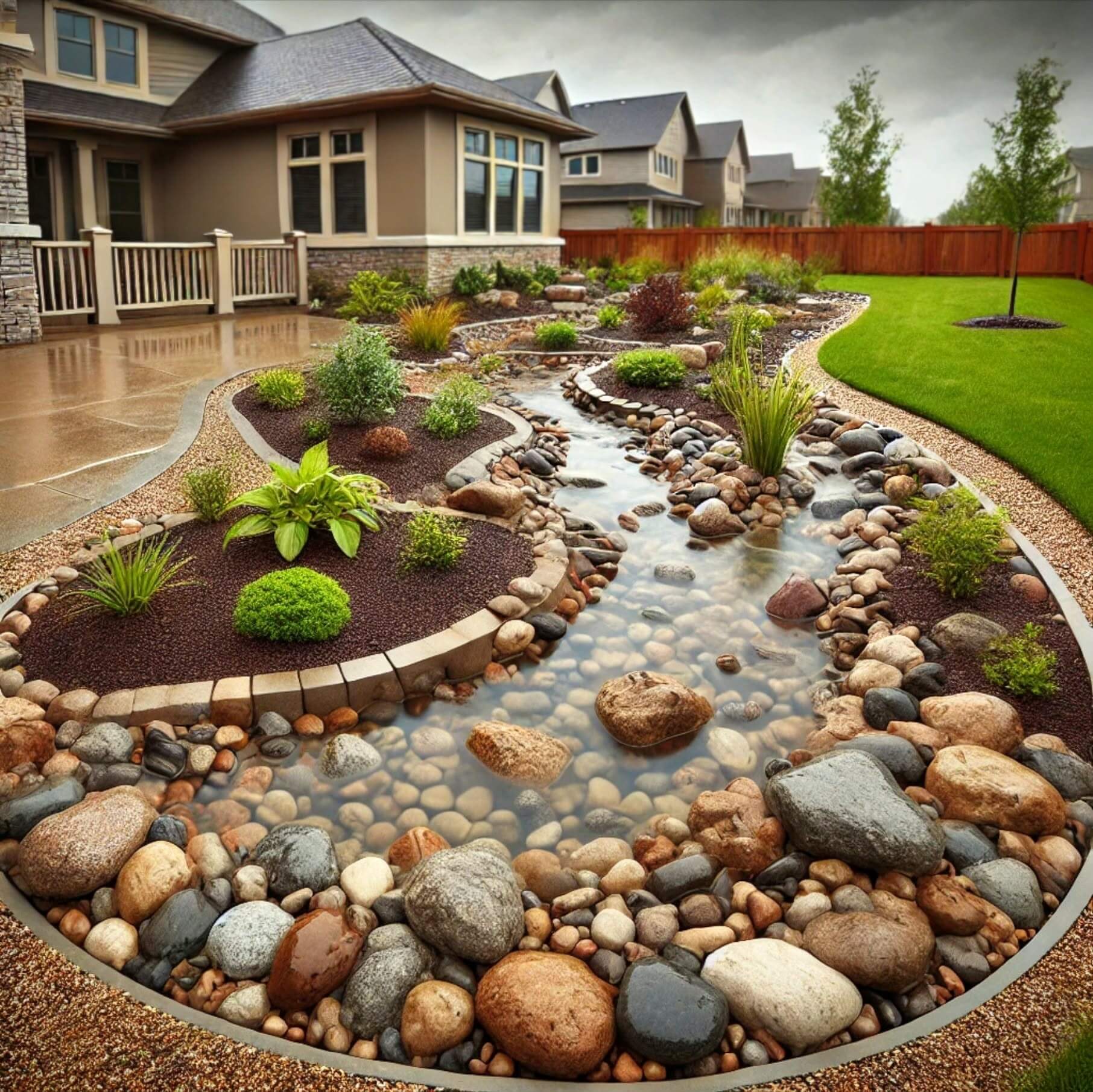
In Minnesota, it is common to see both older homes and newly landscaped yards with:
- Rain gardens
- Decorative rock basins
- Shallow depressions for runoff
- Dry creek beds
- Retention ponds
To most people, these already look like a pond that simply has not been completed yet. The shape is there. The hole is there. The rocks are there. It feels like the rest of the project should be quick.
But this assumption leads to the first misunderstanding: A water feature is not made by simply adding a liner. In reality, a real water feature is made by everything under the liner and up.
This is the part no one sees until the soil is open and the equipment is out. By the time the typical homeowner calls us, they have no idea that their decorative water depression was doing the important job of keeping water away from their home or letting rain soak safely into the land without turning their backyard into a swamp. Turning that space into a sealed water system can create problems that are far more serious than the inconvenience of a dry pond.
Why a Liner Is Not a Final Step, It Is the First Step
A koi pond or water garden is not created from the top down. It is created from the bottom up. The liner is the foundation of the entire system. Everything else depends on what is surrounding these few layers.
A correctly built pond build always requires the same sequence. It does not matter whether the area is untouched lawn or a partially started project. The steps never change.
- A proper excavation that is shaped for water pressure, fish safety, and structural longevity.
- A high quality, professional grade underlayment to protect the liner from punctures.
- A heavy duty EPDM liner with the right dimensions and slack.
- Protective top side underlayment in critical areas.
- Rock and gravel armoring to protect the liner, create biological habitat, and stabilize structure.
When a homeowner says, “Can you just add a liner to what is already here,” the answer is almost always no. To add the liner correctly, everything in the hole has to come out. The rock, the gravel, the soil, the decorative elements. The entire area must be re-excavated and reshaped because a depression made for rainwater rarely has the depth, the safety and structural shelves, the angled walls, or the reinforced edges needed for a real pond.
Real field examples
- We have seen ponds collapse inward because the walls were too steep and became unstable when water pressure changed/increased.
- We have seen pets fall into bare liner ponds because slippery liner edges were exposed. Wet liner is similar to ice, and can be impossible for small pets to get out of after falling into.
- We have seen koi die because shallow koi ponds froze solid in winter.
- We have seen homeowners injured and hospitalized when stepping on unprotected liner.
When this is all you do, you see a thing or two. We have all had homeowners break down and cry when remembering their family dog they lost to an improperly built pond. These situations could have been prevented with proper excavation, underlayment, armoring, and pond design. A liner alone cannot fix an unfinished system.
What Homeowners Do Not Realize About “Finishing” a Pond
Here is the truth that surprises people the most: it often costs the same to finish a partially started pond as it does to build a brand new one.
Why? (for the above reasons, and…) Because we are moving everything twice.
- We remove the existing rocks.
- We remove the gravel.
- We remove the plants.
- We remove much of the soil to re-excavate properly
- Then we start the process the correct way.
This is why we give pricing for full pond builds even when homeowners believe they are “halfway done.” A water feature done right is not built on top of incorrect work. It is built from scratch with the correct structure, proper materials, and safe design. Sometimes having the hole already dug in place can reduce the work needed and the overall price, but more often than not it also adds an additional step that ends up balancing the price savings out with a different expense. Be aware of this when you’re gathering project estimates.
When a Rain Garden Cannot Become a Pond
Many homeowners are surprised when they learn that their rain garden cannot become a koi pond at all. In many Minnesota yards, the low area is not easily able to be turned into something decorative. It is functional drainage. If this area is sealed with a liner, it will no longer drain.
This can cause:
- Flooding toward the home (we’ve seen it)
- Water pooling near foundations (we’ve seen it)
- Erosion (we’ve seen it)
- Overflow into neighboring yards (we’ve seen it)
This is confirmed by the University of Minnesota Extension’s water management guidelines, which explain how stormwater depressions prevent flooding by allowing water to infiltrate the soil rather than sealing it away. Changing these stormwater solutions ends up turning them into “non-solutions” anymore.
A pond liner stops water infiltration completely. Once installed, that water has nowhere to go except up and out when it overflows. That is why part of the job of any professional water feature contractor is protecting homeowners from unintentionally creating expensive flooding problems.
The Better Solution: Rain Collection Water Features
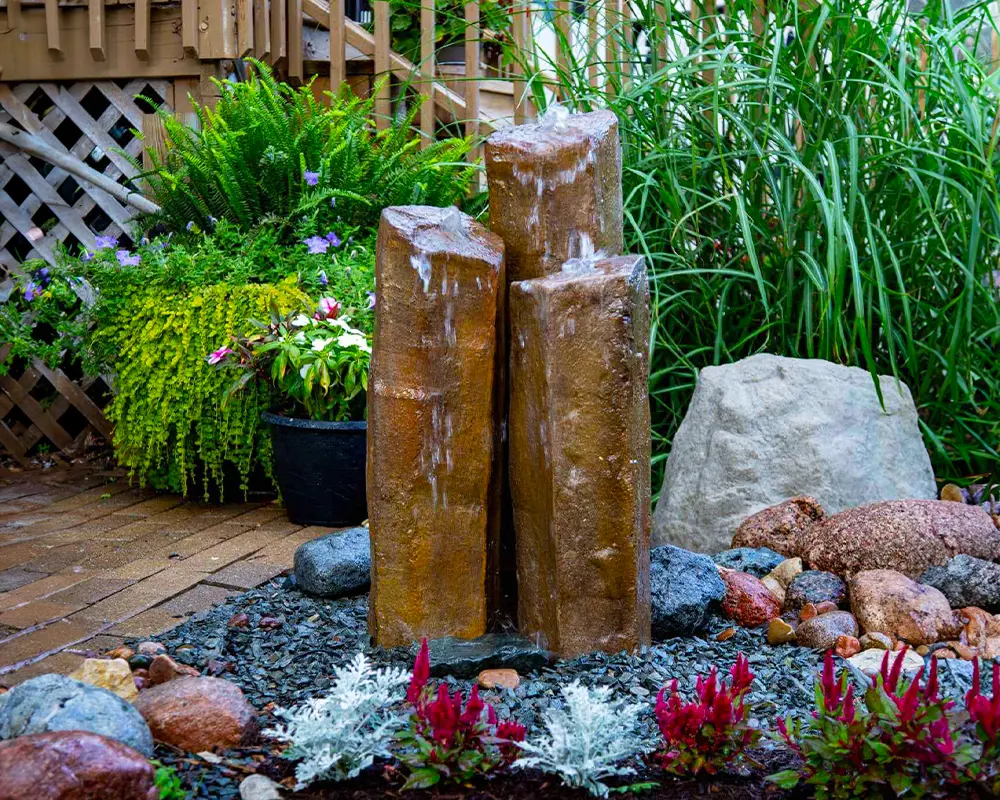
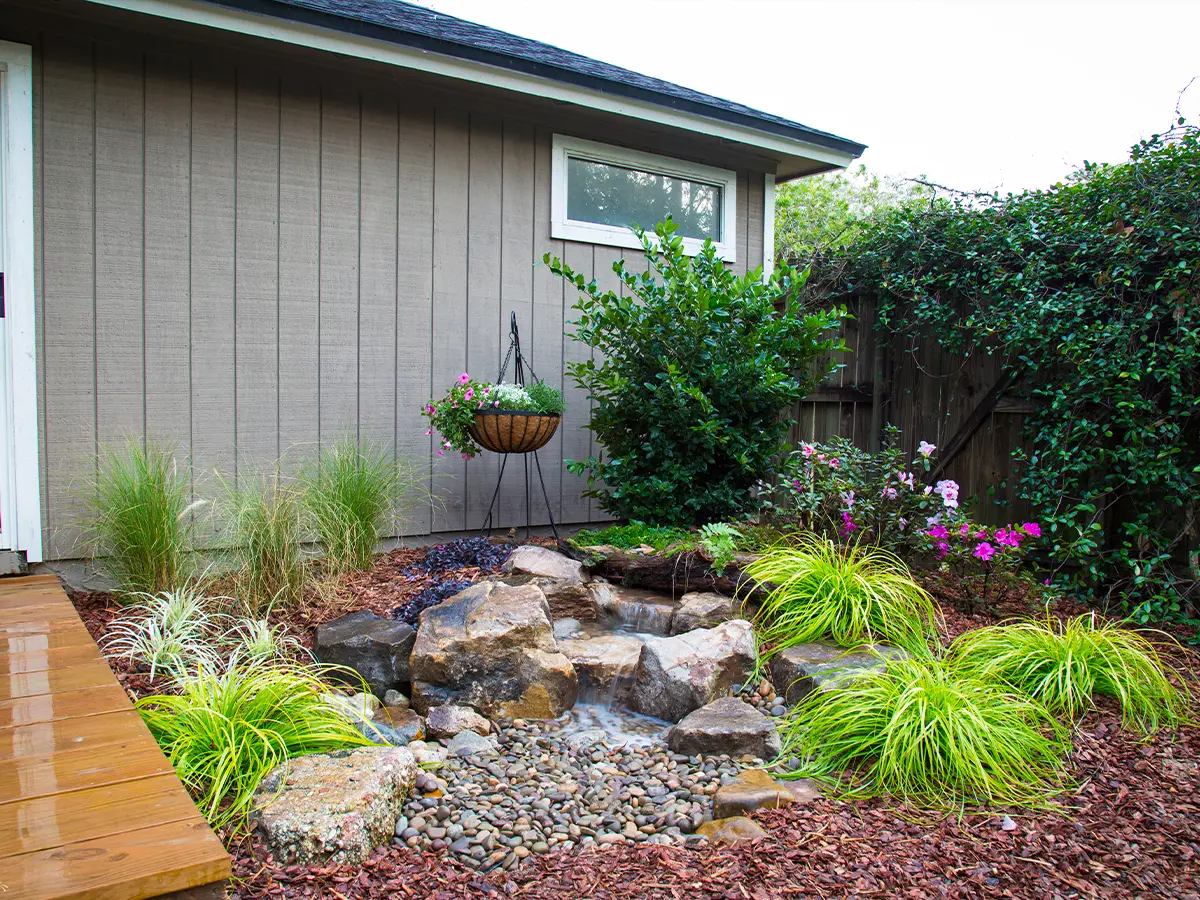
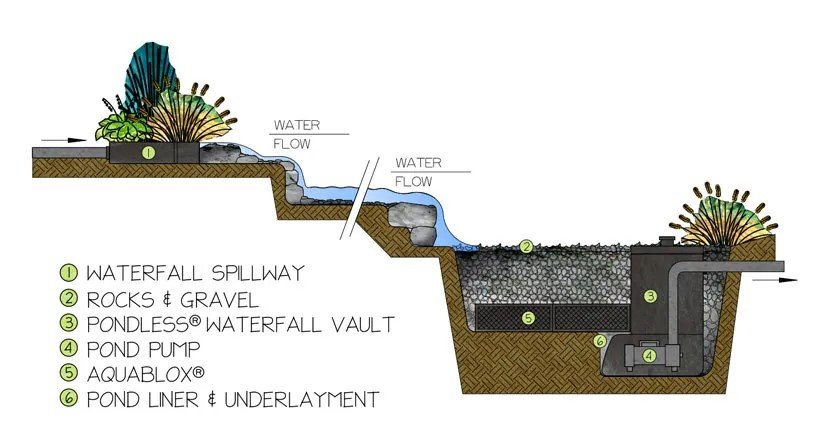
For homeowners like Brian and Melissa, the answer is not always to build a pond. Often the safest and most beautiful option is a disappearing pondless waterfall, water fountain, or bubbling boulder installed on top of an oversized water reservoir. These systems allow water to cycle cleanly at the surface (oxygenates and avoids parasitic stagnation of traditional water barrels) while storing excess rainwater underground where it belongs.
They work beautifully because:
- The water never becomes stagnant.
- Large underground reservoirs can absorb heavy rainfall.
- The feature remains decorative year round.
- Maintenance remains simple (no standing water or koi fish to worry about keeping alive).
- Flood risk stays low.
These systems begin around ten thousand dollars and often range between fifteen and twenty five thousand dollars on average. The cost reflects the engineering hidden beneath the surface. The reservoir must withstand Minnesota’s freeze and thaw cycles. It must be sized correctly for the drainage load. It must hold water safely without collapsing. These systems are functional infrastructure covered by something beautiful. For many homes, this is the safest and smartest path forward.
Since the major cost of these systems is underneath with a simple water feature on top, some homeowners choose to build up and out with an even more impressive water feature since they already have the underground infrastructure in place.
What Contractors Often Overlook
General landscapers do amazing work in their field. They shape land, manage grading, create gardens, and install patios. But water features require training, practice, biological understanding, hydraulic design, and long term ecosystem management. These are not add-ons. These are specialties.
Studies from Aquascape, NALP, and Pond Trade Magazine consistently show that improperly built ponds fail because the original build skipped essential structural steps.
Minnesota’s freeze cycles add even more complexity. The Minnesota DNR documents how soil shifts, contracts, and expands throughout the year. A pond or other water feature built without considering this movement will eventually leak or collapse.
Superior Ponds is built around avoiding these failures. We do not sugarcoat the process. We explain exactly what needs to be done and why. We share predictable pricing because the work itself is predictable when done correctly.
Minnesota Specific Insights for These Projects
Minnesota creates unique challenges that homeowners do not always see.
- Freeze depth reaches further than in many other regions even just a few hours south (different care needs than in Iowa).
- Soil movement creates lateral pressure against pond walls.
- Spring thaws create sudden groundwater surges.
- Rain events can overwhelm improperly sized systems.
- Wildlife activity increases the need for safe rock armoring.
A finished looking hole is not a finished looking system. A pond is a living structure that must be engineered for the region.
Summary
Turning a partially started pond, rock garden, farm pond, or drainage basin into a real water feature sounds simple. “Just add a liner, just finish what is there.” But real ponds are built from the ground up, not from a hole up.
They require proper excavation, multiple layers of liner protection, rock armoring, biological design, and professional equipment sized for long term performance. Finishing a poorly started system is usually the same amount of work as starting over. In many cases, the water retention basin in question cannot be a pond at all without causing serious drainage issues. There are better solutions like pondless waterfalls, healthier systems, and safer options that still give you the beauty and tranquility you are hoping for.
How Superior Ponds Can Help
At Superior Ponds, we specialize exclusively in water features. We do not cut corners. We do not guess. We do not sugarcoat the reality of the work (the process of getting a water feature is a real headache!). We help you understand the safest and smartest option for your yard so your water feature becomes a place of peace, not frustration.
If you are considering finishing a partially started pond or exploring a rain garden conversion, we would love to guide you through your options. Together, we can create a beautiful, reliable, and low-maintenance feature that thrives in Minnesota’s climate.
“Connecting people to water”