
The Ugly Truth About Beautiful Ponds: Why Every Great Water Feature Project Starts as a Headache
When Cheryl in Apple Valley first called us, she sounded tired. Not physically, but emotionally. She’d already been through what most homeowners hope will never happen: a disappointing pond experience.
Her first pond sat proudly in her front yard, a dream centerpiece she had hired a reputable landscaping company from the Minneapolis Home and Garden Show grand showcase to build for her. It looked beautiful at first glance. But only a couple weeks in, she realized it was leaking. The company that had built it, already moved on to their next patio or retaining wall, said they didn’t know what the problem could be because they just build water features when people ask. After Cheryl tried again to get them to honor their warranty, they stopped returning her calls.
By the time she reached out to us at Superior Ponds, she was both cautious and frustrated. She wanted another pond, this time in her backyard, but she didn’t want another disaster.
When I told her our quote was $11,566 for a pond half the size of her original, she hesitated. But as I explained the difference with proper filtration (basics such as a skimmer), balanced circulation, and the system design behind the beauty, she realized that what she bought before wasn’t a true ecosystem pond. It was a hole with rocks and a pump.
So, she took a deep breath and said yes.
And then everything went wrong…

The Honest Reality: Pond Projects Are Messy
We told Cheryl the truth right from the start: the process of building or renovating a pond isn’t fun for a client. It’s muddy, loud, stressful, and often frustrating.
- The week we began, her driveway became a mud track as we hauled tons of rock and liner through the narrow side yard access.
- Her irrigation lines were hit, leading to a frantic call to an irrigation contractor.
- Her dog nearly ran away one morning when she forgot our crew was working in back.
- Her grass was worn down in a path, her yard looked like a construction zone, and her peace of mind vanished.
- To make matters worse, the brand-new pond leaked on day one.
If you’re a homeowner who’s ever started a big home project, especially one that transforms your yard, you know that sinking feeling. You invested thousands, your property looks like a war zone, and you start wondering: Was this a mistake?
But here’s the truth: it’s not a mistake — it’s the process.
The Emotional Toll of Transformation
Studies show that 78% of homeowners feel “moderate to high stress” during major outdoor renovations, especially when their yard becomes inaccessible for multiple days (Houzz & Home Survey, 2023).
This stress comes from disruption. Not knowing what’s happening day to day, losing control of the space, and seeing the temporary chaos that precedes the beauty.
Water feature projects, in particular, amplify that stress because they’re both technical and emotional. Unlike a patio or fence, a pond is alive. It’s an ecosystem that has to breathe, circulate, and self-balance. That’s what makes it magical, and what makes it hard to build right the first time.
When landscapers approach ponds like they do patios or mulch beds, the results are predictable: leaks, poor filtration, dead fish, and cloudy water. According to Aquascape Inc., a national pond education leader, over 60% of all new pond installations fail within their first two years. This is more often not because of materials, but because of design and installation errors.
Why We Warn Our Clients — and Why Cheryl Thanked Us for It
We told Cheryl before she signed the deposit check:
“Your pond WILL leak.”
Not because we wanted to scare her, but because we wanted to set realistic expectations.
Every ecosystem koi pond settles. Every liner seam, plumbing joint, and water path can change as the new system finds equilibrium. The trick isn’t to pretend it won’t happen, the trick is to be prepared when it does.
That’s why we built Cheryl’s project plan with two follow-up visits scheduled from the start. We also promised to stand by our warranty no matter what we found.
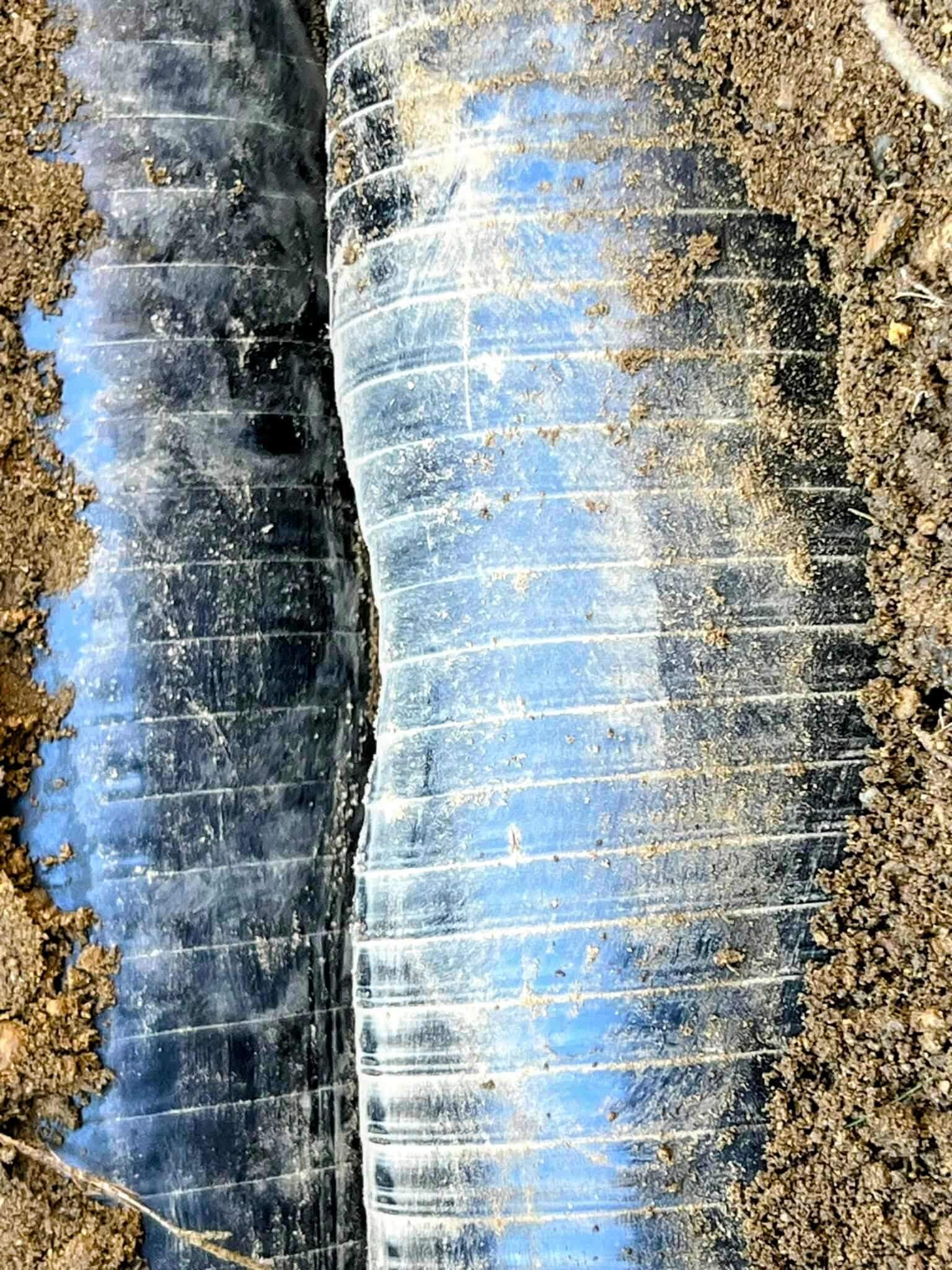
So when that first leak appeared, we were ready. We came back, diagnosed a low liner edge from a rock set weird on the liner, and fixed it. Then another problem surfaced. This time, the plumbing line had pin-hole leaks from the manufacturer that were slowly leaking the entire few weeks after installation. After diagnosing that it wasn’t just evaporation, we dug down and found the wet spots. Instead of patching sections, we pulled up the line and replaced it. At no cost to Cheryl.
That’s the difference between a company that hides problems and one that fixes them.
Why Big Pond Projects Feel So Bad (and Why That’s Okay)
Cheryl’s story isn’t rare, it’s the norm. And it’s worth talking about because homeowners deserve honesty before they invest.
Here are five reasons why koi pond installations and renovations feel awful, even when they’re going right.
1. Your Backyard Turns Into a Construction Zone
Between the machinery and tools, rock loads, and material staging, your yard will look like something out of a demolition movie. There’s mud. There’s noise. There’s dust.
But that chaos is part of the process. It’s what allows the liner to settle, the rocks to be placed properly, and the water flow to be fine-tuned for circulation.
As the University of Minnesota Extension notes, proper grading and excavation are critical for water management. Skipping this step is one of the leading causes of future leaks and drainage issues (UMN Extension, 2024). Attempting workarounds to the process rarely results in successful outcomes.
2. Timing Rarely Goes as Planned
Minnesota weather is unpredictable. One week it’s 70°F and sunny; the next, it’s sleet and rain. Crews sometimes have to pause mid-build for safety or site conditions, and even sometimes (although rarely) because some important piece of equipment is on backorder. The past few years have taught us that sometimes no amount of planning can account for manufacturer delays. A one-week project could (and has) easily turn into a two-week project.
According to the National Association of Landscape Professionals (NALP), even the most efficient outdoor projects experience an average of 15–25% schedule variation due to weather or supply-chain issues. That’s normal, and that’s why clear communication and flexibility are crucial. We try to be as clear and upfront as possible with our seasonal schedule so you know ahead of time how to plan.
3. The “Leak Anxiety” Is Real
When a pond leaks, it feels personal. You start checking the water level twice a day. You imagine catastrophic failures.
But 9 times out of 10, it’s a simple fix. A misplaced rock, a low edge, or a settling spot. In most Minnesota ecosystem ponds, a small leak adjustment is part of the system “break-in” period. The key is having a contractor who expects that, and builds the follow-up into your building or remodel plan from day one.
4. The Mess Extends Beyond the Pond
Pond projects don’t just touch one area. They spill into driveways, side yards, and entire lawns.
We washed Cheryl’s driveway when the project ended because of all the mud we tracked during the build. While a good contractor cleans up, there’s no escaping the temporary chaos. That’s part of why we encourage clients to plan to be away from home during active work, just like Cheryl did. She spent extra time away from home picking out new plants for around her pond. She said all the time away really helped her avoid having to process the mess in her carefully tended backyard.
5. The Emotional Rollercoaster
It’s easy to underestimate the emotional impact of watching your yard be torn apart.
Research on homeowner remodeling stress shows that 68% of people report regret at some point during the process, not because of the result, but because of mid-project overwhelm (Harvard Joint Center for Housing Studies, 2022). That’s why we walk our clients through every step of what’s happening, what might go wrong, and what the next day might look like. Because transparency replaces uncertainty. You will regret your project, and we want you to be ready when that happens.
Don’t Sugarcoat the Process
There’s a saying in our shop:
“We don’t prevent problems — we plan for them.”
That’s the honest difference between us and many landscapers who build ponds on the side. Most landscape companies mean well. But ponds aren’t just aesthetic features, they’re living systems. They require specialized training in hydrology, filtration, circulation, and biological balance.
Our crews are trained through Aquascape University, a nationally recognized education program that teaches ecosystem pond science, from nitrogen cycling to pump dynamics. Every technician on our team completes these certifications during their onboarding and stays up to date with the latest industry breakthroughs.
We’ve worked with over 600 homeowners across Minnesota. We’ve seen what goes wrong, and how to make it right.
That’s why, at Superior Ponds, we take an uncommon approach:
- We prepare clients for the mess.
- We communicate clearly and often.
- We build follow-ups into the schedule.
- And we stand behind our warranty. No excuses, no ghosting. We want to be there in 20 years when you’re ready to remodel!
It’s not perfect, but it’s honest.
The Science Behind the Chaos
Why do ponds leak or “settle”? Here’s what most homeowners never hear explained:
- Ground movement: Minnesota’s freeze-thaw cycles can shift soil as much as 1–2 inches each season (Minnesota DNR, 2023). That movement affects liners, plumbing, and rock stability (this is also why using the right materials is so important).
- Biofilm and algae bloom: The first 30–60 days of any new pond build are biologically unstable. Beneficial bacteria are still colonizing, and water chemistry fluctuates, sometimes causing cloudy water or odor. We call this stage “New Pond Syndrome.” It WILL look nasty for a time period.
- Material curing: Certain sealants and fittings expand or contract during temperature swings, which can create pinhole leaks that aren’t visible right away.
- Waterfall splash zones: Odd stone placement can cause small spillovers, which lower water level but aren’t actual “leaks.” They just need to be adjusted to prevent excessive spillover and forced evaporation.
Knowing this upfront takes the panic out of the process. These issues don’t mean your pond was built wrong, they mean it’s finding balance.
When the Mud Settles
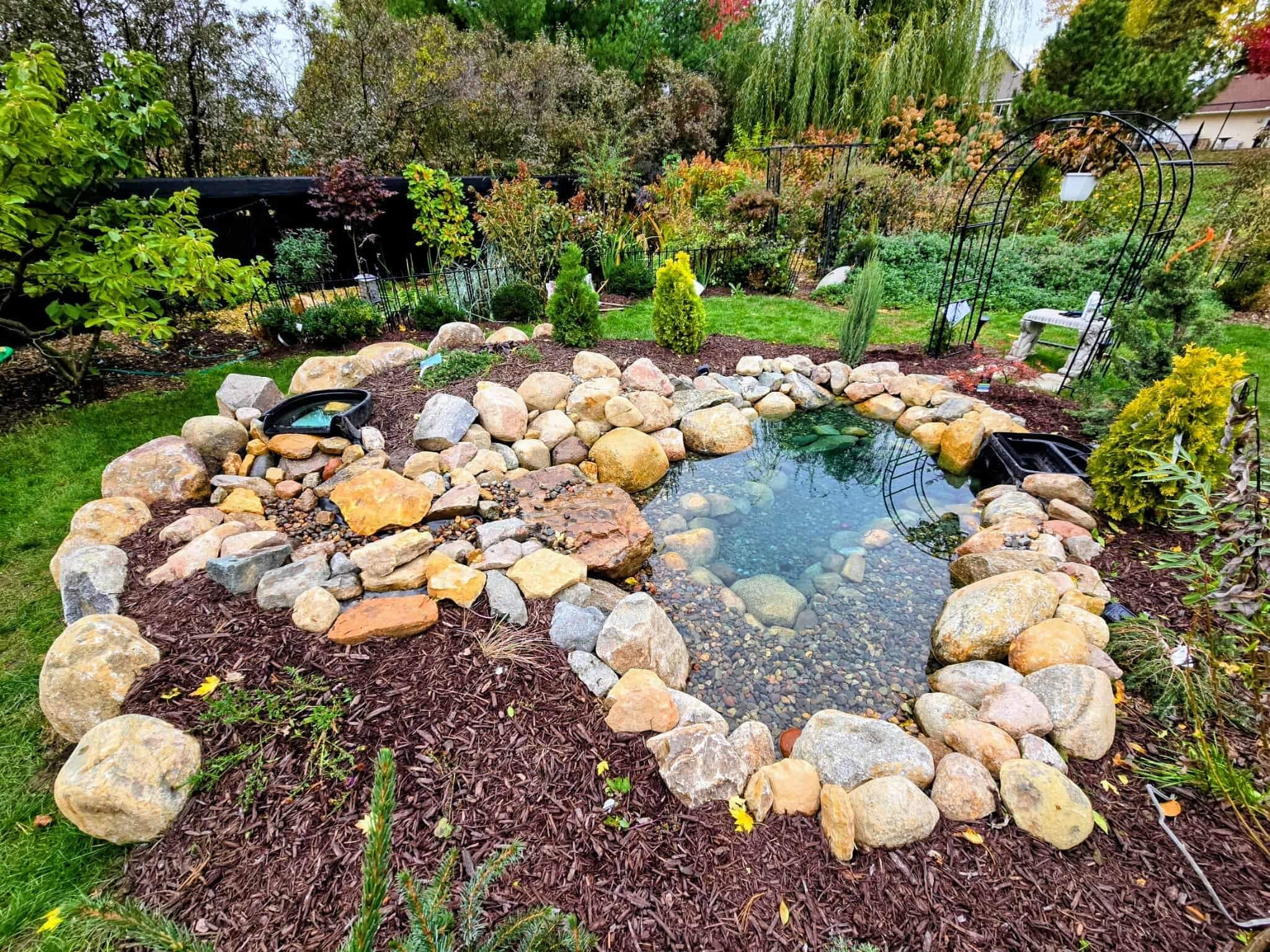
After a week of mud, mess, and frustration, Cheryl finally walked into her backyard on the day we filled the pond.
The sound of the waterfall echoed through her garden, and sunlight shimmered across the freshly placed stones.
The once-chaotic site was now calm, peaceful, and alive. She called it “magical.”
All the noise and disruption faded in that moment, replaced by joy.
A few days later, we came back for our follow-up and, as expected, found a slow leak from a misplaced rock. We fixed it. Then found the faulty plumbing line. Dug it up. Replaced it. Fixed that too.
Now, Cheryl can spend her mornings gardening by that same pond watching her fish glide through the water and listening to the birds enjoying her pond.
The memory of that muddy mess is long gone — but the peace remains.
Lessons From the Mess: What You Should Know Before Your Pond Project
If you’re thinking about building or renovating a pond, here’s what you should remember:
- The build process is disruptive — and that’s okay. It’s temporary. The beauty comes later.
- Leaks happen. Plan for them. A good water feature contractor includes follow-ups in your project scope.
- Your contractor matters more than your design. A pond’s success depends on proper construction, not appearance alone.
- Expect problems — but also expect accountability. The difference between a bad experience and a great one is whether your builder shows up to make it right.
- You’ll forget the frustration, but you’ll remember the peace. The noise, the mud, the stress… they all fade once your pond starts to live.
The Bigger Picture
Ponds are emotional investments. They’re not just landscaping, they’re sanctuaries.
But like anything meaningful, they come with struggle first.
As writer Charles Bukowski once said, “What matters most is how well you walk through the fire.” For pond owners, that fire is the build process: the week of chaos before the calm. And when it’s done right, what you get isn’t just a pond. You get a piece of nature that breathes life into your home.
Final Thoughts: The Pain Is Temporary, the Peace Is Permanent
At Superior Ponds, we don’t promise a smooth process — we promise the right one.
You’ll have a muddy yard, torn-up grass, and probably a few moments of regret.
But when the water starts to flow, and you see the life return to your space, you’ll understand why we do it this way.
Because unlike the landscaper who builds and disappears, we build and stay.
We plan for problems, fix them when they come, and make sure your pond becomes what it was meant to be — a stress-free, worry-free, tranquil retreat that connects you back to water the way nature intended.
Want to schedule a call today to get started on your new pond? Or want to plan a professional visit from an expert to plan the design out with you in person? Let us know how we can help you today!`